Agentic AI Is Your Biggest Security Blind Spot in 2026: What the Data Shows

Your endpoints are secured. Employees spot phishing. Zero Trust is in place. But now, hundreds or thousands of autonomous AI agents operate across your organization. They access sensitive data and call external APIs often without proper identity checks, monitoring, or quick shutdown options.This year’s top security challenge was a clear focus at RSAC 2026 in San Francisco. Nearly 44,000 attendees discussed what many characterize as the most significant shift in enterprise risk since the rise of the cloud: the rapid proliferation of agentic AI autonomous systems as the primary attack surface. This shift sets the stage for urgent organizational action.To understand what’s at stake, let’s start by reviewing the latest data illuminating these risks, identifying the threats already in motion, and outlining the necessary steps your organization must take now to avoid becoming the next breach headline.
The Agentic AI Threat Landscape: What RSAC 2026 Revealed
The Confidence Gap Is Dangerously Wide
A recent Cloud Security Alliance report found 78% of organizations use or test agentic AI, but only 6% have advanced security strategies and dedicate 6% of their budgets to this risk.As a result, 97% of enterprise leaders expect an AI agent-driven security or fraud incident within 12 months.These growing concerns are not hypothetical: evidence shows the problem is already unfolding across industries.
Machine Identities Have Exploded, And They’re Largely Unmanaged
Machine identities now outnumber human employees by 82 to 1. Every AI agent and integration could be an entry point for attackers.At the conference, Microsoft announced Microsoft Entra Agent ID, underscoring the seriousness with which it is addressing the identity issue. This platform gives each AI agent a unique identity and applies the same governance used for people, apps, and devices. It’s a good step, but it only works within Microsoft’s ecosystem.If your organization uses a mix of AI environments, as most do, this identity management gap remains significant. Executives must prioritize this risk with urgency and drive cross-team action.
Adversaries Are Targeting Agents, Not Just Humans
Gartner projects that 40% of enterprise applications will feature task-specific AI agents by 2026. Adversaries have noticed.The OWASP Top 10 for Large Language Model Applications, updated for 2026, highlights prompt injection, tool misuse, privilege escalation, memory poisoning, and cascading failures as the main attack methods against agentic systems. Microsoft published guidance just before RSAC (March 30, 2026) to address these OWASP risks in Copilot Studio, demonstrating that even large vendors’ AI tools require additional security.At the conference, Google Cloud announced new features to boost agentic AI defense by adding Mandiant’s threat intelligence directly into AI security workflows. This shows that defending against agentic AI requires real-time, advanced intelligence, not just fixed policy controls.
Recent Breaches: The Cost of Moving Fast Without Security
The Drift Protocol Attack: $285 Million and a Lesson in Social Engineering
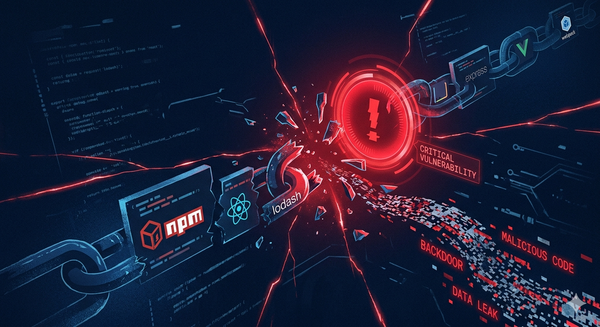
On April 1, 2026, Drift Protocol, a Solana-based decentralized exchange, confirmed the theft of $285 million following an operation investigators described as months-long and meticulously planned, attributed to the North Korean state-sponsored threat group UNC4736 (also tracked as AppleJeus, Citrine Sleet, and Gleaming Pisces).The attack didn’t start with a zero-day exploit. It started with trust, a relationship built and then abused at the right moment. This is similar to the Axios npm supply chain compromise, also linked to North Korean actors, where targeted social engineering led to a compromised package that could have impacted millions of applications.The lesson goes beyond crypto: supply chain and third-party trust attacks have quadrupled in the last five years. If your AI agents use third-party APIs, take in outside data, or run community plugins, your attack surface is much bigger than your own network.
Critical Vulnerabilities That Demand Immediate Action
Two critical vulnerability disclosures deserve immediate attention from enterprise security teams:
- Fortinet FortiClient EMS received emergency out-of-band patches for a critical flaw already being exploited in the wild.
- Cisco Integrated Management Controller (IMC) patched a CVSS score of 9.8 vulnerability that allowed unauthenticated remote attackers to bypass authentication and gain elevated privileges.
If your company uses either platform and hasn’t patched yet, escalate this issue to the executive team immediately. Delayed action invites critical risk exposure.
The Regulatory Pressure Is Real, and the Clock Is Ticking
EU AI Act: August 2, 2026 Compliance Deadline
For any organization operating in or doing business with the European Union, August 2, 2026, marks a hard compliance deadline. Specific transparency requirements and rules governing high-risk AI systems come into force under the EU AI Act. The European Commission is expected to publish additional guidance on practical application throughout 2026.Executives must immediately map all AI systems to the Act’s risk categories: unacceptable, high, limited, and minimal. Delaying jeopardizes your entire business.
U.S. State-Level AI Legislation Is Accelerating
At the federal level, the December 2025 Executive Order on AI governance signaled intent to consolidate oversight, but at the state level, legislation is moving fast. In the first weeks of March 2026 alone:
- Washington approved five AI-related bills, including measures on AI content disclosure and chatbot safety for minors.
- Utah closed its legislative session with nine AI bills enacted.
- Virginia passed three AI bills in a single week.
- Vermont signed an AI election media law on March 5, 2026
Gartner predicts that by 2026, over half of large companies will require AI compliance audits. Companies lacking AI inventories, risk assessments, and governance may face fines or loss of cyber insurance coverage.
A Framework for Responding: The ARIA Methodology
Based on current threat intelligence and what experts agreed on at RSAC 2026, organizations should use the ARIA framework's four steps to secure agentic AI environments:
1. Audit (Know What You Have)
Before you can secure agentic AI, you must know where it exists. Conduct a comprehensive AI asset discovery across your enterprise, including:
- All AI agents and copilots in production or pilot
- All machine identities (service accounts, API keys, OAuth tokens, agent credentials)
- All third-party AI plugins, integrations, and model endpoints in use
This is non-negotiable. Executives cannot control risk unless all assets are visible. The time to act is now.
2. Restrict (Apply Least Privilege Aggressively)
AI agents should operate under the same or stricter least-privilege principles as human users. Practical steps include:
- Assign unique, auditable identities to every agent (tools like Microsoft Entra Agent ID, 1Password Unified Access, or equivalent platforms)
- Scope agent permissions to the minimum required for each specific task
- Implement runtime authorization rather than static permission grants.
- Deploy AI firewalls and prompt injection detection at agent input/output boundaries.
3. Instrument (Monitor Behavior Continuously)
Static policy controls aren’t enough for autonomous systems. Real-time monitoring of behavior is a must:
- Log all agent actions, tool calls, and data access requests.
- Establish behavioral baselines and alert on anomalous agent activity.
- Feed agent telemetry into your SIEM/XDR platform
- Conduct regular adversarial red-teaming against your AI agent deployments (now increasingly required by cyber insurers)
4. Align (Build Governance Around Compliance Requirements)
Map your AI posture to the regulatory requirements that apply to your industry and geography:
- Inventory AI systems by risk category (EU AI Act tiering)
- Document AI governance policies, risk assessments, and incident response procedures
- Engage legal and compliance teams on state-level AI legislation applicable to your operations.
- Integrate AI governance into your existing GRC frameworks rather than treating it as a separate task.
Common Mistakes to Avoid
Conflating AI governance with AI security. Governance defines policies; security enforces them. Both are required. Many organizations have drafted governance frameworks with no enforcement mechanism.Assuming vendor-built AI tools are secure by default. Even major platforms from big providers need extra security work. The OWASP guidance for Microsoft Copilot Studio shows that just because a tool is from a well-known vendor doesn’t mean it’s secure for your environment.Ignoring the supply chain. Your security posture is only as strong as the least-secured third-party package, plugin, or API your agents depend on. The North Korean-attributed Axios compromise demonstrated that even foundational, trusted open-source packages are legitimate targets.Not documenting your work. Whether for cyber insurance, compliance, or incident response, the organizations that will do best in 2026 are those with clear, auditable records of their AI security practices, not just good intentions.
The Bottom Line for Your Organization
Agentic AI isn’t on the way; it’s already in your environment, often before your security team even notices. The attackers going after these systems are skilled, patient, and often backed by nation-states. Regulations are becoming stricter, and insurance companies are beginning to factor this risk into their pricing.The real question isn’t if your organization will face an agentic AI security challenge, but whether you’ll be ready or caught off guard.
Sources
- IBM Think: Cybersecurity Trends 2026
- Cloud Security Alliance: State of AI Cybersecurity 2026
- RSAC 2026 Opening Press Release
- RSAC 2026 Closing Press Release
- Microsoft Security Blog: Secure Agentic AI End-to-End
- Microsoft Security Blog: Addressing OWASP Top 10 Risks in Agentic AI
- Microsoft Community Hub: Microsoft Entra Innovations at RSAC 2026
- Google Cloud Blog: RSAC '26 — Supercharging Agentic AI Defense
- Dark Reading: 2026 — Agentic AI Becomes the Attack-Surface Poster Child
- eSecurity Planet: RSAC 2026 — Rethinking Trust in Agentic AI Security
- Arkose Labs: 97% of Enterprises Expect a Major AI Agent Security Incident
- HBR Sponsored / Palo Alto Networks: 6 Cybersecurity Predictions for the AI Economy in 2026