Cloud-Native Threats and AI-Powered Attacks: What IT Leaders Must Know This Week
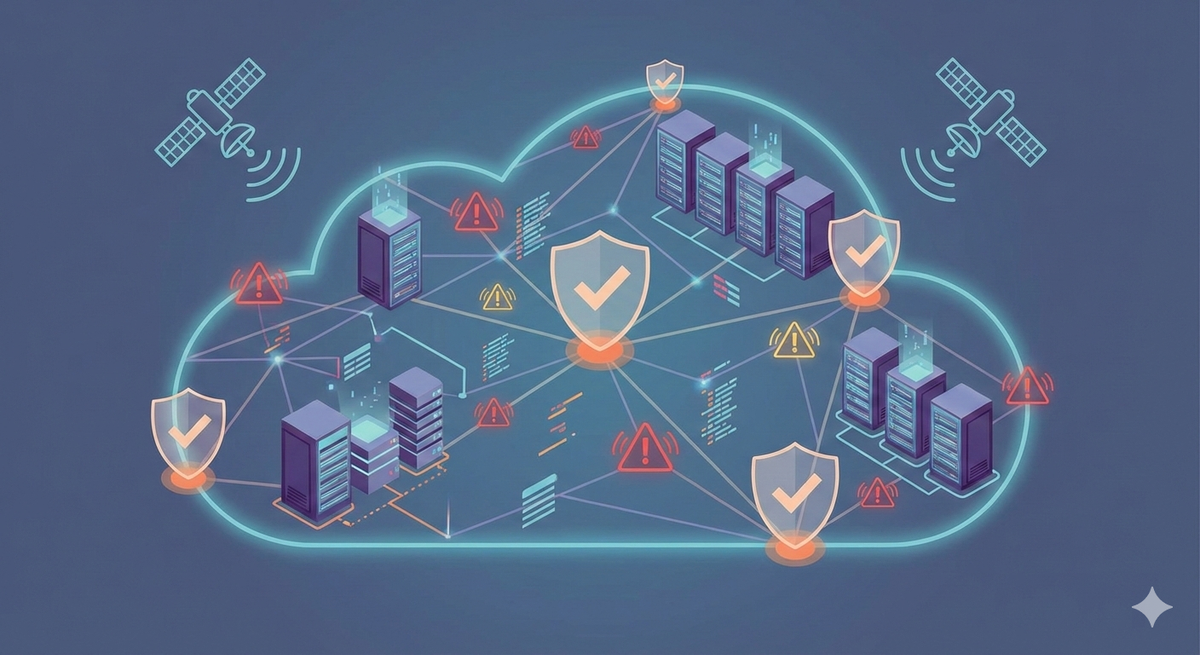
Recent events serve as a sobering reminder that the cybersecurity landscape is evolving faster than many organizations can adapt. From a sophisticated new malware framework designed specifically for cloud environments to alarming findings from the World Economic Forum about AI-weaponized fraud, IT leaders face mounting pressure to reassess their defensive strategies—immediately.
This week's developments aren't isolated incidents. They represent a coordinated shift in how threat actors operate, combining advanced tradecraft with an intimate understanding of modern cloud architectures.
VoidLink: A New Era of Cloud-Native Malware
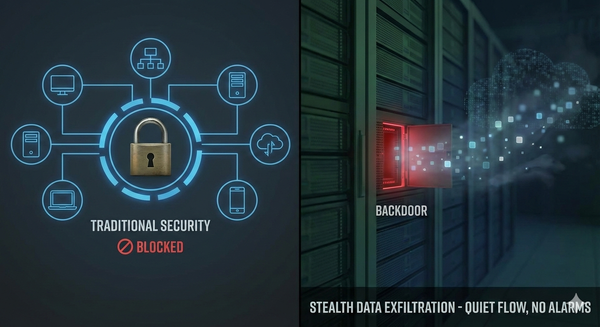
Check Point Research disclosed on January 13 a previously undocumented malware framework dubbed "VoidLink" that should concern every organization running Linux-based cloud workloads. Unlike traditional malware that gets retrofitted for cloud environments, VoidLink was engineered from the ground up to exploit cloud infrastructure.
What Makes VoidLink Different
Written in the Zig programming language, VoidLink represents enterprise-grade sophistication rarely seen in Linux malware. The framework can automatically detect which cloud provider hosts a compromised system—including AWS, Azure, Google Cloud, Alibaba, and Tencent—and adapt its behavior accordingly.
More concerning: VoidLink actively detects whether it's running inside Kubernetes pods or Docker containers and adjusts its tactics to blend with legitimate infrastructure operations. The framework includes over 30 modular plugins enabling reconnaissance, credential theft, lateral movement, and persistent access.
Advanced Evasion Capabilities
VoidLink employs multiple sophisticated operational security mechanisms. Upon deployment, the malware enumerates installed security products and kernel hardening technologies, calculates a risk score for the environment, and adapts its behavior accordingly. In highly monitored environments, the framework reduces the aggressiveness of scanning and increases the timing intervals between command-and-control communications.
The framework includes multiple rootkit implementations—LD_PRELOAD, eBPF, and Loadable Kernel Modules—deployed based on kernel version and detected capabilities. These enable selective hiding of processes, files, network sockets, and the rootkit modules themselves.
If VoidLink detects any tampering or debugging attempts, it immediately triggers its self-deletion mechanism, removing all traces from the infected system and complicating forensic analysis.
Defensive Priorities for VoidLink
Organizations should implement these immediate countermeasures:
- Monitor eBPF usage across production systems—unexpected eBPF programs attached to syscalls indicate potential rootkit activity.
- Alert on modifications to /etc/ld.so.preload or the LD_PRELOAD environment variable in containers
- Enforce strict kernel module signing to prevent loading of unsigned modules.
- Restrict outbound traffic from cloud workloads, particularly DNS and ICMP tunneling.
- Limit access to Instance Metadata Services (IMDSv2) to prevent environment fingerprinting.
Check Point noted VoidLink harvests credentials from source control systems like Git, suggesting software developers and CI/CD pipelines are primary targets—likely as entry points for future supply chain compromises.
WEF Global Cybersecurity Outlook 2026: Fraud Overtakes Ransomware
The World Economic Forum released its annual Global Cybersecurity Outlook on January 12, and the findings represent a fundamental shift in threat priorities.
The New Top Concern: Cyber-Enabled Fraud
For the first time, CEOs rank cyber-enabled fraud and phishing above ransomware as their primary cybersecurity concern. According to the survey of 804 global business leaders across 92 countries, 73% of respondents report that they or someone in their professional network experienced cyber-enabled fraud during 2025.
Meanwhile, 87% of cybersecurity leaders reported an increase in AI-related vulnerabilities over the past year, with 94% expecting AI to be the most consequential force shaping cybersecurity in 2026.
Key Statistics That Demand Attention
The report reveals several concerning trends:
- 64% of organizations now factor geopolitically motivated cyberattacks into their risk strategies
- 91% of large enterprises have modified their cybersecurity posture due to geopolitical volatility
- 31% of respondents express low confidence in their nation's ability to respond to significant cyber incidents—up from 26% last year
- Small organizations are twice as likely to experience insufficient cyber resilience compared to large organizations.
The AI Paradox
Organizations find themselves caught in a strategic paradox: AI serves as both a force multiplier for defenders and a weapon for attackers. While 77% of organizations have adopted AI for cybersecurity—primarily for phishing detection (52%) and intrusion response (46%)—the rapid deployment of generative AI creates new attack surfaces.
Data leakage linked to generative AI (34%) and advancing adversarial capabilities (29%) rank among the leading concerns for 2026.
The Widening Cyber Inequity Gap
The report highlights a troubling disparity in cyber resilience across organizational types. NGOs report 37% insufficient resilience, and the public sector 23%, compared with just 11% in the private sector. Larger organizations are emerging as early leaders in leveraging AI-driven threat detection and automation, while smaller entities, governments, and NGOs lag behind.
Within interconnected supply chains, these capability differences significantly increase systemic exposure: adversaries can target less-protected partners to infiltrate high-value organizations downstream.
Strategic Takeaways for IT Leadership
This week's developments share a common thread: attackers are targeting the infrastructure and tools that organizations trust most implicitly. Cloud platforms and AI systems represent high-value targets precisely because they touch everything.
Recommended Actions
Immediate (Next 30 Days):
- Conduct an asset inventory focused on Linux cloud workloads and containerized environments.
- Assess AI tool deployments for data leakage risks and implement governance controls.
- Review egress filtering rules for cloud workloads, notably DNS and ICMP traffic.
Short-Term (Next 90 Days):
- Implement runtime container security with eBPF monitoring capabilities
- Establish formal security review processes for AI tools before deployment
- Develop threat intelligence sharing arrangements with industry peers
- Audit cloud metadata access controls across all environments
Strategic (Next 12 Months):
- Transition toward Zero Trust architectures for cloud workloads
- Align cybersecurity strategy with geopolitical risk assessments.
- Build capabilities to detect and respond to AI-enhanced attacks.
- Address cyber resilience gaps with smaller partners and vendors in your supply chain.
The Path Forward
The convergence of cloud-native threats and AI-weaponized fraud demands a strategic response that goes beyond point solutions. Organizations that thrive in this environment will be those that treat cybersecurity as a continuous process of adaptation rather than a static defensive posture.
The good news: awareness of these threats creates opportunity for proactive defense. The question is whether your organization will act before becoming the following case study.
Sources
- Check Point Research. "VoidLink: The Cloud-Native Malware Framework." January 13, 2026. https://research.checkpoint.com/2026/voidlink-the-cloud-native-malware-framework/
- World Economic Forum. "Global Cybersecurity Outlook 2026." January 12, 2026. https://www.weforum.org/publications/global-cybersecurity-outlook-2026/
- The Hacker News. "New Advanced Linux VoidLink Malware Targets Cloud and Container Environments." January 13, 2026. https://thehackernews.com/2026/01/new-advanced-linux-voidlink-malware.html
- Infosecurity Magazine. "World Economic Forum: Cyber-fraud overtakes ransomware." January 12, 2026. https://www.infosecurity-magazine.com/news/fraud-overtakes-ransomware-as-top/
- Help Net Security. "Enterprise security faces a three-front war: cybercrime, AI misuse, and supply chains." January 13, 2026. https://www.helpnetsecurity.com/2026/01/13/wef-global-cybersecurity-outlook-2026/
- Check Point Blog. "VoidLink: The Cloud-Native Malware Framework Weaponizing Linux Infrastructure." January 13, 2026. https://blog.checkpoint.com/research/voidlink-the-cloud-native-malware-framework-weaponizing-linux-infrastructure