Critical Cisco Zero-Day Under Active Attack: What Your Security Team Must Do Now

If your organization runs Cisco Secure Email Gateway or Secure Email and Web Manager appliances, you need to act today—not tomorrow.
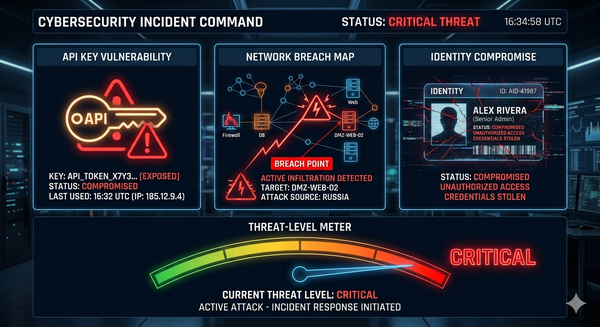
Cisco disclosed this week that a maximum-severity zero-day vulnerability (CVE-2025-20393) is being actively exploited by a sophisticated Chinese state-sponsored threat actor tracked as UAT-9686. Recognizing this critical threat underscores the vital role your team plays in defending our organization. Immediate action is essential to protect our assets.
This is not a theoretical risk. Attacks have been ongoing since late November 2025, and CISA has already added this vulnerability to its Known Exploited Vulnerabilities (KEV) catalog with a remediation deadline of December 24, 2025, for federal agencies. The exploitation could lead to data breaches, operational disruptions, or loss of sensitive information across your organization.
What Makes This Attack So Dangerous
The vulnerability allows attackers to execute arbitrary commands with root privileges on affected appliances. Once inside, the threat actors are deploying a sophisticated toolkit:
AquaShell: A lightweight Python backdoor that listens for encoded commands via unauthenticated HTTP POST requests
AquaTunnel (ReverseSSH): Tunneling tools previously associated with Chinese APT groups, including APT41 and UNC5174
Chisel: An additional tunneling capability for maintaining persistent access
AquaPurge: A log-cleaning utility designed to erase evidence of the intrusion
The attack chain reveals a well-resourced adversary with clear objectives: establish persistence, maintain stealth, and retain long-term access to compromised infrastructure. These are hallmarks of espionage operations, not opportunistic cybercrime.
Are You Exposed?
The vulnerability affects both physical and virtual Cisco Secure Email Gateway (formerly Email Security Appliance) and Cisco Secure Email and Web Manager (formerly Content Security Management Appliance) appliances running AsyncOS software.
However, exploitation requires a specific non-default configuration. You are potentially vulnerable if your Spam Quarantine feature is enabled AND exposed to the internet.
Immediate verification steps:
Check your appliance configuration via the web management interface. Verify whether Spam Quarantine is enabled and review which network interfaces have external access. If you discover internet-facing management ports on affected appliances, treat this as a priority incident.
Mitigation Actions Without a Patch
Since no software patch exists yet, your security team must implement compensating controls immediately:
Restrict internet access to vulnerable appliances. Place them behind firewalls that filter and log traffic to management interfaces.
Limit connections to trusted hosts only using access control lists (ACLs) or firewall rules.
Separate mail-handling and management functions by ensuring management interfaces are accessible only from internal networks.
Enable comprehensive logging and monitor web access logs for unusual POST request patterns or unexpected authentication attempts.
Review authentication configurations. Implement SAML or LDAP authentication where possible. Ensure default passwords have been changed and SSL/TLS certificates are correctly configured.
Retain forensic evidence. If you suspect compromise, preserve logs before threat actors can deploy their log-cleaning utilities.
The Cisco zero-day doesn't exist in isolation. December 2025 has brought a wave of concerning activity, underscoring the need for your team to stay vigilant and informed. Keeping up with these developments helps you feel prepared and confident in your security measures. This Cisco zero-day doesn't exist in isolation. December 2025 has delivered a wave of concerning activity:
Credential-stuffing campaigns are hammering enterprise VPN infrastructure. GreyNoise detected coordinated, automated attacks targeting Cisco SSL VPN and Palo Alto Networks GlobalProtect portals, with over 10,000 unique IPs conducting brute-force login attempts on December 11-12, 2025.
North Korea's cryptocurrency theft reached a record $2.02 billion in 2025, according to Chainalysis research released this week. The DPRK now accounts for 76% of all service-level crypto compromises, with a single breach (Bybit, February 2025) responsible for $1.5 billion in losses. Their evolving tactics include embedding IT workers inside target organizations to gain privileged access.
CISA updated its BRICKSTORM backdoor analysis with new indicators of compromise and YARA detection signatures for Rust-based malware samples, highlighting persistent nation-state threats to critical infrastructure.
What This Means for Your 2026 Security Roadmap
These incidents reinforce several strategic imperatives:
Zero Trust is not optional. Network segmentation and least-privilege access are your primary defenses when attackers bypass perimeter security. Every appliance, especially security infrastructure, should operate under the assumption that networks are already compromised.
Patch management velocity matters less when zero-days dominate. Your security posture increasingly depends on detection capabilities, network visibility, and rapid incident response—not just patching speed.
Nation-state actors are targeting security infrastructure directly. Email gateways, VPN appliances, and management consoles are high-value targets precisely because they're trusted. Hardening these systems deserves dedicated attention.
Insider threats extend to IT staffing. North Korea's IT worker infiltration campaigns demonstrate that background verification and access management extend far beyond traditional perimeters.
Recommended Detection Measures
Beyond the immediate mitigations, security teams should implement detection capabilities for this threat:
Monitor for unusual outbound connections from email security appliances, particularly SSH tunneling or WebSocket traffic to unknown destinations.
Deploy indicators of compromise from Cisco Talos (available on their GitHub repository), such as specific file hashes, network signatures, or unusual traffic patterns, across your security stack to detect potential exploitation attempts.
Review authentication logs for email management interfaces to identify successful logins from unexpected sources.
Implement network detection rules for known AquaTunnel and Chisel traffic patterns.
Common Mistakes to Avoid
Do not assume you're safe because "it's a limited attack." Advanced persistent threat actors start with limited targeting and expand. Today's "limited subset" can become tomorrow's broad campaign once techniques are refined.
Do not wait for the patch to act. Implementing compensating controls now is crucial, as the vulnerability is actively being exploited. Your prompt response can significantly influence the organization's security posture and reinforce your team's effectiveness.
Do not rely solely on perimeter defenses. If attackers are already inside the email security infrastructure, they've bypassed your perimeter. Assume breach and verify.
Moving Forward
The Cisco AsyncOS zero-day represents exactly the scenario security leaders fear: a critical vulnerability in security infrastructure itself, actively exploited by sophisticated adversaries, with no immediate fix available.
Your response over the next 48-72 hours will determine whether your organization joins the list of compromised targets or successfully mitigates this threat.
If your team needs assistance assessing exposure, implementing emergency mitigations, or developing detection capabilities for these threats, our incident response and security architecture specialists are available for immediate consultation.
Sources
- Cisco Security Advisory and Talos Intelligence Blog: December 17, 2025
- CISA KEV Catalog: CVE-2025-20393 added December 2025, remediation deadline December 24, 2025
- Chainalysis Crypto Crime Report: December 18, 2025 (North Korea theft figures: $2.02B in 2025, $6.75B cumulative)
- GreyNoise threat intelligence: VPN credential-stuffing campaign observations December 11-12, 2025
All statistics and findings in this article are sourced from the cited vendor advisories and research reports. Verify current patch availability status at the time of publication, as Cisco may release updates.