Edge Device Security Crisis: Critical Firewall Vulnerabilities and Nation-State Attacks Dominate December 2025

The Perfect Storm at Your Network's Edge
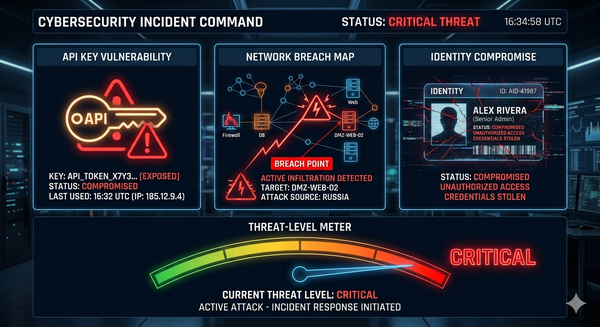
The week of December 22-24, 2025, delivered a stark reminder that your network perimeter remains the most contested territory in enterprise cybersecurity. In an unprecedented convergence of threats, four major network security vendors—Cisco, WatchGuard, Fortinet, and SonicWall—simultaneously disclosed critical vulnerabilities that are currently under active exploitation.
This isn't a coincidence. It's a coordinated assault on enterprise infrastructure.
As an IT professional, the sophistication and coordination reported this week represent a fundamental escalation in adversary capabilities. If your organization relies on any of these vendors for network perimeter defense, your December holiday plans need to include emergency patching.
Cisco AsyncOS: A Maximum-Severity Zero-Day With No Patch
The most alarming disclosure came from Cisco, which on December 17 revealed that a China-linked advanced persistent threat (APT) group designated UAT-9686 has been actively exploiting CVE-2025-20393 since late November.
The Critical Details:
- CVSS Score: 10.0 (Maximum Severity)
- Affected Products: Cisco Secure Email Gateway and Cisco Secure Email and Web Manager appliances
- Attack Vector: Improper input validation allowing unauthenticated remote code execution with root privileges
- Patch Status: Unpatched as of December 24, 2025
According to Cisco's disclosure, successful exploitation requires the Spam Quarantine feature to be enabled and exposed to the internet—a configuration that is not enabled by default but is common in enterprise deployments.
The attackers have deployed a sophisticated malware toolkit, including:
- AquaShell: A Python backdoor for persistent access
- AquaTunnel (ReverseSSH): For establishing covert communication channels
- Chisel: For tunneling traffic
- AquaPurge: A log-cleaning utility to cover tracks
CISA added CVE-2025-20393 to its Known Exploited Vulnerabilities (KEV) catalog, mandating federal agencies apply mitigations by December 24, 2025.
Immediate Actions for Cisco Customers
Since no patch is available, organizations must implement compensating controls:
- Verify whether Spam Quarantine is enabled on your appliances.
- If enabled, immediately restrict access to trusted IP addresses only using firewall ACLs
- Disable internet-facing exposure of the Spam Quarantine web interface
- Monitor for indicators of compromise provided in Cisco's advisory.
- If compromise is suspected, a complete appliance rebuild is the only effective remediation—configuration changes alone cannot remove the persistence mechanisms.
WatchGuard Firebox: 125,000 Devices Exposed Globally
On December 18, WatchGuard released emergency patches for CVE-2025-14733, a critical out-of-bounds write vulnerability in Fireware OS affecting the IKEv2 VPN daemon (iked).
Key Facts:
- CVSS Score: 9.3
- Attack Vector: Remote, unauthenticated code execution via malformed IKEv2 certificate payloads
- Scope: Shadowserver Foundation scans identified nearly 125,000 vulnerable IP addresses globally, with over 35,000 in the United States alone
WatchGuard confirmed active exploitation and shared indicators of compromise, including:
- Log messages about certificate chains longer than 8
- IKE_AUTH requests with abnormally large CERT payloads (greater than 2000 bytes)
- VPN connections are dropping due to the iked process hanging
Notably, attack infrastructure overlaps with recent Fortinet exploitation campaigns, suggesting either shared infrastructure or a coordinated campaign across multiple vendor platforms.
CISA added this vulnerability to the KEV catalog on December 19, with remediation required by December 26, 2025.
Fortinet and SonicWall: The Broader Campaign
The WatchGuard disclosure didn't occur in isolation. Earlier in December:
Fortinet detected exploitation of CVE-2025-59718 and CVE-2025-59719, both rated 9.8 on the CVSS scale, affecting FortiOS, FortiWeb, FortiProxy, and FortiSwitchManager. These authentication bypass flaws enable attackers to gain administrative access to vulnerable devices.
SonicWall disclosed that CVE-2025-40602, a privilege escalation vulnerability in SMA 100 series appliances, is being chained with CVE-2025-23006 (CVSS 9.8) to achieve unauthenticated, remote, root-level code execution.
Pattern Recognition: Why Edge Devices Are Under Siege
Edge devices have become prime targets for several reasons:
- Strategic positioning: Firewalls and VPN appliances sit at the network boundary with visibility into all traffic
- Trust relationships: These devices often hold credentials for downstream systems.
- Limited monitoring: Many organizations don't apply the same security telemetry standards to network appliances as they do to endpoints
- Infrequent patching: Maintenance windows for perimeter devices are often delayed due to availability concerns
- Persistence value: Compromised edge devices provide long-term, stealthy access
Beyond the Perimeter: Data Breaches Making Headlines
While edge device vulnerabilities dominated technical discussions, significant data breaches continued to affect organizations across sectors:
University of Phoenix disclosed a breach affecting approximately 3.5 million individuals. The incident, discovered on November 21 but originating on August 13, exposed names, Social Security numbers, and other personal identifiers of current students, former attendees, and staff.
Goldman Sachs warned fund investors that their data may have been exposed in a breach at outside counsel Fried, Frank, Harris, Shriver & Jacobson LLP, disclosed on December 19.
TriZetto Provider Solutions, a healthcare revenue management vendor, notified clients of unauthorized access to a web portal affecting physicians, hospitals, and health systems. The breach began in November 2024 but wasn't discovered until October 2025—nearly a year of undetected access.
Nation-State Attribution: China and Russia Active
The week's disclosures reinforced the ongoing threat from nation-state actors:
China-Linked Activity: Cisco Talos attributed the AsyncOS exploitation to UAT-9686, with tooling and infrastructure consistent with known Chinese APT groups APT41 and UNC5174. The attackers demonstrated sophisticated operational security and persistence capabilities.
Russia-Linked Activity: Denmark's Defence Intelligence Service formally attributed recent attacks on Danish infrastructure—including a water utility breach and DDoS attacks preceding the 2025 municipal elections—to pro-Russian hacktivist groups Z-Pentest and NoName057(16).
The agency stated plainly: "Russia's cyber operations form part of a broader influence campaign intended to undermine Western support for Ukraine."
Framework for Immediate Response
For IT directors and CISOs reading this during the holiday week, here's a prioritized action framework:
Priority 1: Asset Inventory (Next 24 Hours)
- Identify all Cisco Secure Email Gateway and Web Manager appliances.
- Catalog all WatchGuard Firebox devices with IKEv2 VPN configurations
- Inventory SonicWall SMA 100 series and Fortinet devices
Priority 2: Exposure Assessment (Next 48 Hours)
- Verify which appliances have management interfaces or exposed vulnerable services on the internet.
- Review VPN configurations for unnecessary internet-facing exposure.
- Cross-reference configurations against vendor-published vulnerable states
Priority 3: Apply Available Patches (Next 72 Hours)
- Prioritize WatchGuard Fireware OS updates (patch available)
- Apply Fortinet patches where available.
- Apply SonicWall patches where available.
Priority 4: Implement Compensating Controls (Immediately for Unpatched Systems)
- Restrict management interface access via ACLs
- Implement network segmentation to limit lateral movement potential.
- Enable enhanced logging and forward to SIEM.
- Deploy additional monitoring for indicators of compromise.
Priority 5: Incident Response Preparation
- Brief incident response teams on the current threat landscape
- Pre-position response resources for potential compromise discovery
- Establish communication protocols for holiday period coverage.
Common Mistakes to Avoid
Mistake 1: Waiting for the "real" patch window. When CISA mandates remediation within 72 hours, your standard monthly patch cycle is insufficient.
Mistake 2: Assuming appliance logs tell the whole story. Attackers are deploying log-cleaning utilities specifically to evade detection. Absence of evidence is not evidence of absence.
Mistake 3: Patching without a compromise assessment. Before patching, verify you're not simply sealing in existing malware. Compromise indicators must be evaluated first.
Mistake 4: Underestimating rebuild requirements. For confirmed Cisco AsyncOS compromises, configuration-level changes don't remove persistence mechanisms. A complete rebuild is required.
Mistake 5: Treating this as a single-vendor issue. The coordinated nature of these attacks across Cisco, WatchGuard, Fortinet, and SonicWall suggests broader reconnaissance of enterprise perimeters. A comprehensive assessment is essential.
Looking Ahead: The 2026 Perimeter
As we close out 2025, the lesson is clear: network perimeter devices require the same security rigor we apply to endpoints and cloud workloads. This means:
- Continuous vulnerability monitoring specific to network infrastructure
- Zero Trust architecture principles applied to management plane access
- Enhanced detection capabilities on network appliances
- Regular firmware integrity verification
- Reduced internet exposure of management and auxiliary services
The adversaries targeting our network edges are sophisticated, well-resourced, and patient. Our defenses must match that determination.
Your Next Steps
The scale and coordination of this week's disclosures demand immediate attention. If your security team needs assistance with vulnerability assessment, incident response, or strategic planning for perimeter security in 2026, [contact our team] for a consultation.
Our experienced consultants have helped organizations across healthcare, finance, and critical infrastructure navigate complex security challenges—including active exploitation scenarios like those we're seeing this week.
Don't let your edge become your exposure.
Sources:
- CISA Known Exploited Vulnerabilities Catalog
- Cisco Security Advisory: cisco-sa-sma-attack-N9bf4
- WatchGuard Security Advisory: WGSA-2025-0027
- The Hacker News Weekly Recap, December 22, 2025
- Check Point Research Threat Intelligence Report, December 22, 2025