From Reactive to Proactive: How Security Teams Are Winning the War Against Software Supply Chain Attacks for 2026
The Software Supply Chain Is Under Siege
To keep security teams engaged, emphasize that relying solely on patching known vulnerabilities is outdated. Stress the urgency of adopting proactive strategies to address the exponential rise in software supply chain attacks, as detailed in Sonatype's 2024 report, and maintain focus on modern threats.
The traditional model—identify a CVE, apply a patch, move on—assumes attackers play by predictable rules. They don't. Modern threat actors are compromising the very building blocks of your applications: the open-source libraries, packages, and dependencies your developers pull from public registries like npm, PyPI, and Maven Central every single day.
The velocity of supply chain threats represents one of the most significant shifts I've witnessed. Here's what forward-thinking security teams are doing differently—and how your organization can adapt.
Beyond CVEs: Behavioral Scanning as the New Baseline
Why Traditional Vulnerability Scanning Falls Short
Known vulnerabilities represent only a fraction of supply chain risk. The more insidious threat comes from malicious packages that have never been flagged—code specifically designed to evade detection while exfiltrating data or establishing persistence.
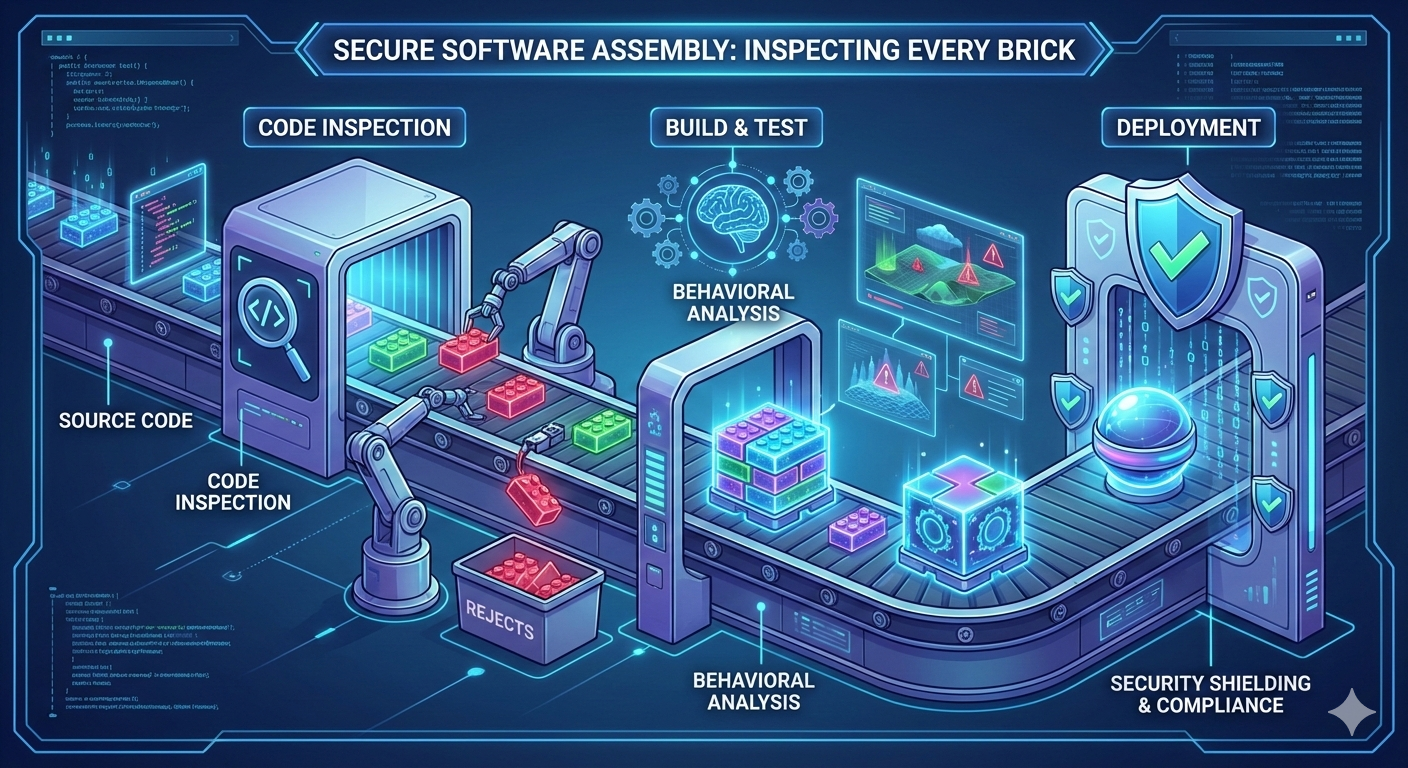
Leading security teams now deploy behavioral analysis that examines what code does, not just whether it matches a known signature. This includes detecting:
- Typosquatting packages that mimic legitimate library names (think "requests" instead of "requests")
- Obfuscated code with hidden or encrypted payloads designed to evade static analysis
- Suspicious metadata patterns, such as packages published via disposable accounts or repositories with artificially inflated star counts
- Data exfiltration signals where code attempts to collect hostnames, IP addresses, or environment variables and transmit them to external endpoints
Research from Check Point has documented sophisticated typosquatting campaigns targeting PyPI users. At the same time, Socket Security's analysis revealed attackers increasingly using Discord webhooks as command-and-control channels—a technique that blends malicious traffic with legitimate developer communications.
Real-Time Detection: Speed as a Security Control
The Zero-Day Package Problem
Here's the uncomfortable reality: when a malicious package hits a public registry, traditional security tools often don't catch it until after it's been downloaded thousands of times. The window between publication and detection can be hours or even days—an eternity in security terms.
Progressive organizations now implement real-time monitoring that flags suspicious updates within minutes of publication. This capability is critical because:
- Registry maintainers can't review every package instantly
- Downstream consumers automatically pull updates, propagating risk rapidly
- Attackers specifically time releases to maximize exposure before removal
The goal isn't perfect detection—it's reducing the blast radius by catching threats before they propagate through your software supply chain.
DevSecOps: Shifting Security Left Without Shifting Blame
Empowering Developers as the First Line of Defense
Security teams that position themselves as gatekeepers create friction. Security teams that empower developers create resilience.
The most effective supply chain security programs integrate feedback loops directly into development environments—surfacing actionable intelligence within GitHub, VS Code, or whatever tools your developers already use. This 'secure by design' approach empowers developers to identify malicious dependencies during coding, fostering a collaborative effort that enhances resilience.
Key implementation principles include:
- Contextual alerts that explain why a dependency is flagged, not just that it's blocked
- Suggested alternatives when a package is deemed risky
- Minimal workflow disruption to maintain developer velocity and buy-in
- Clear escalation paths for edge cases requiring security team review
This isn't about making developers responsible for security decisions beyond their expertise. It's about giving them visibility into risks they genuinely want to avoid.
Technical Hardening: Locking Down the Installation Phase
The Danger of Automatic Script Execution
Many supply chain attacks exploit a simple mechanism: preinstall and postinstall scripts that execute automatically when a package is added to a project. These scripts can run arbitrary code before your application even knows the package exists.
Security teams are implementing stricter controls:
- Integrity verification through signature and hash validation before any script execution
- Disabling automatic execution of shell scripts and remote payloads by default
- Sandboxed inspection for untrusted code, allowing static and dynamic analysis in isolated environments
These controls add friction to the development process—there's no avoiding that. The key is implementing them in ways that interrupt workflows only when genuine risk is present.
AI Governance: Securing the Emerging Attack Surface
When Your Coding Assistant Becomes a Liability
AI-generated code is revolutionizing development velocity, but it's also introducing supply chain risks that most organizations haven't yet addressed. AI coding assistants may suggest vulnerable or malicious dependencies, and the code they generate often lacks the security evaluation that human-written code receives.
Forward-thinking security leaders are adopting unified AI safety frameworks that address:
- Strict data filtering to prevent AI agents from storing or exposing sensitive information
- Provenance tracking to monitor the origin and validity of AI-suggested dependencies
- Least-privilege access controls limiting AI tools' reach into internal systems
The risk of a "backdoored" coding assistant isn't theoretical—it's an emerging threat vector that demands governance frameworks before incidents occur.
Strategic Automation: From Visibility to Remediation
The scale of modern software supply chains makes manual review impossible. Organizations are increasingly turning to exposure management platforms that not only identify risks but automate remediation workflows.
ServiceNow's acquisition of Armis signals the industry's direction: unified platforms that provide visibility across the entire digital infrastructure and close vulnerabilities through automated workflows. The goal is to reduce mean time to remediation, not just mean time to detection.
Understanding the Threat: A Modern Trojan Horse
Think of a supply chain attack as a Trojan Horse with a modern twist. Instead of enemies hiding inside a gift brought through the city gates, they're hiding inside the bricks and mortar delivered to your construction sites. Security teams can no longer guard the gates—they must inspect the chemical composition of every brick before it's laid in the wall.
This analogy captures both the sophistication of modern attacks and the fundamental shift in defensive strategy required.
Common Mistakes to Avoid
- Assuming private registries eliminate risk: Internal mirrors can propagate malicious packages just as effectively as public registries.
- Treating supply chain security as a one-time project: This is an ongoing operational capability, not a checklist item.
- Ignoring transitive dependencies: Your direct dependencies have their own dependencies, each of which can represent a potential risk.
- Blocking without education: Developers who don't understand why packages are blocked will find workarounds
Taking Action
Software supply chain security is no longer optional—it's foundational to any modern security program. If your organization is still relying primarily on reactive measures, the time to evolve is now.
Sources
• Sonatype 2024 State of the Software Supply Chain Report
• Check Point - PyPI Typosquatting Campaign Analysis