MongoBleed and the Year-End Security Storm: What IT Leaders Must Know About December's Critical Vulnerabilities

As 2025 draws to a close, security teams are responding to one of the most active vulnerability-exploitation campaigns of the year. The MongoBleed vulnerability (CVE-2025-14847) has moved from disclosure to active exploitation in under a week, leaving approximately 87,000 MongoDB servers exposed worldwide. Combined with major breaches affecting organizations from space agencies to media conglomerates, this final week of 2025 serves as a stark reminder that cyber threats don't take holidays.
The MongoBleed Crisis: A Timeline of Rapid Exploitation
On December 19, MongoDB released patches for CVE-2025-14847, a high-severity vulnerability (CVSS 8.7) in the database platform's zlib compression protocol. Within days, the situation escalated dramatically:
- December 19: MongoDB issues patches and an initial advisory
- December 24: OX Security publishes technical analysis detailing exploitation mechanics
- December 26: Working proof-of-concept exploit released publicly
- December 29: CISA adds CVE-2025-14847 to its Known Exploited Vulnerabilities catalog
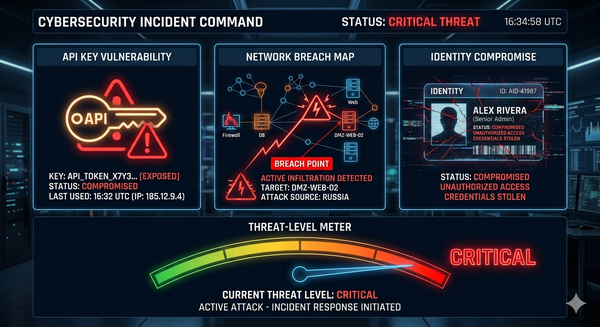
The vulnerability, dubbed "MongoBleed" as an homage to the infamous Heartbleed bug, allows unauthenticated attackers to extract sensitive information from server memory—including user credentials, API keys, and session tokens—without authentication.
Why MongoBleed Is Particularly Dangerous
The flaw lies in the MongoDB Server's zlib message-decompression implementation. By sending malformed compressed network packets, attackers can cause servers to return uninitialized heap memory directly to the client. What makes this especially concerning:
- Pre-authentication exploitation: The vulnerable code path executes before any authentication checks
- Default configuration affected: zlib compression is enabled by default on MongoDB installations
- No user interaction required: Attacks can be fully automated against internet-exposed instances
- Wide attack surface: Censys data indicates 87,000+ potentially vulnerable instances globally, with concentrations in the United States, China, Germany, India, and France
Immediate Action Items for Database Teams
Organizations running MongoDB should take the following steps:
- Patch immediately to versions 8.2.3, 8.0.17, 7.0.28, 6.0.27, 5.0.32, or 4.4.30
- Audit internet exposure using your attack surface management tools
- Review network segmentation to ensure databases are not directly accessible from untrusted networks
- Rotate credentials for any MongoDB instances that may have been exposed.
- Deploy the MongoBleed Detector tool to identify potential exploitation attempts.
Federal agencies face a January 19, 2026, deadline to remediate per CISA's Binding Operational Directive.
Breaches Making Headlines as 2025 Closes
MongoBleed isn't the only security incident demanding attention this week. Several significant breaches have been confirmed or disclosed:
European Space Agency Data Breach
The European Space Agency confirmed a security breach on December 30, acknowledging that threat actors claimed to have exfiltrated approximately 200 gigabytes of data. According to reports, the stolen data allegedly includes source code, API tokens, system configuration files, and hardcoded credentials. ESA stated that initial forensic analysis identified a limited number of affected science servers located outside the corporate network. [VERIFY: current status as of publication]
Insurance Giant Aflac: 22.7 Million Affected
Aflac has confirmed that a June 2025 breach resulted in the theft of insurance claims data, health information, and Social Security numbers affecting approximately 22.7 million individuals in its US business. The attack has been attributed to the Scattered Spider threat group. [VERIFY: final impact numbers as of publication]
Trust Wallet Chrome Extension Compromise
A supply chain attack on the Trust Wallet Chrome extension resulted in approximately $7 million in cryptocurrency theft. Attackers used a leaked Chrome Web Store API key to push a malicious extension update (v2.68) on December 24, which passed Chrome's review process. The malicious version exfiltrated wallet information to attacker-controlled infrastructure, affecting 2,596 confirmed wallet addresses. Trust Wallet has indicated the possibility of nation-state involvement.
Condé Nast Publications Data Exposure
A threat actor known as "Lovely" has claimed to have exfiltrated user data from multiple Condé Nast properties, including over 2.3 million Wired.com user accounts and nearly 6.8 million accounts from The New Yorker. Exposed data reportedly includes full names, email addresses, user IDs, and account timestamps dating back to 2011. [VERIFY: Condé Nast response status]
The Emerging Threat: Agentic AI and MCP Security
As we look toward 2026, a new attack surface has emerged that security leaders cannot ignore: Model Context Protocol (MCP) servers powering agentic AI systems.
MCP has rapidly become the standard interface allowing AI agents to interact with databases, tools, and enterprise resources. In just months, thousands of MCP servers have been deployed across organizations—often with minimal security oversight. Recent findings are concerning:
- Security researchers discovered the first malicious MCP server in the wild in September 2025, impersonating Postmark's email service and exfiltrating all messages sent through it.
- A July scan identified 1,862 internet-exposed MCP servers, almost all of which lacked authentication.
- Critical vulnerabilities such as CVE-2025-6514 (CVSS 9.6) demonstrate weaknesses in OAuth authentication across MCP implementations.
- The EchoLeak vulnerability (CVE-2025-32711) showed how hidden prompts in documents could manipulate Microsoft 365 Copilot.
Securing Your AI Infrastructure
Organizations deploying AI agents should implement these controls:
- Inventory all MCP servers across your environment, including shadow deployments
- Enforce authentication on all MCP endpoints—never expose unauthenticated servers
- Implement least-privilege access for AI agents interacting with enterprise systems
- Monitor AI agent behavior for anomalous tool calls or data access patterns
- Establish AI Bills of Materials to track vetted AI components in your applications
- Deploy MCP security gateways to inspect and moderate AI-to-tool communications
2025 by the Numbers: A Year of Unprecedented Cyber Risk
The incidents of this week cap what has been a record-breaking year for cybersecurity challenges. Industry analysis indicates:
- Global cybercrime costs reached an estimated $10.5 trillion in 2025 [VERIFY SOURCE]
- 44% of breaches involved ransomware [VERIFY SOURCE]
- 30% of incidents were linked to supply chain or third-party failures—double the previous year [VERIFY SOURCE]
- 16 billion credentials were leaked across various breaches [VERIFY SOURCE]
- DDoS attacks reached 5.6 Tbps in peak volume [VERIFY SOURCE]
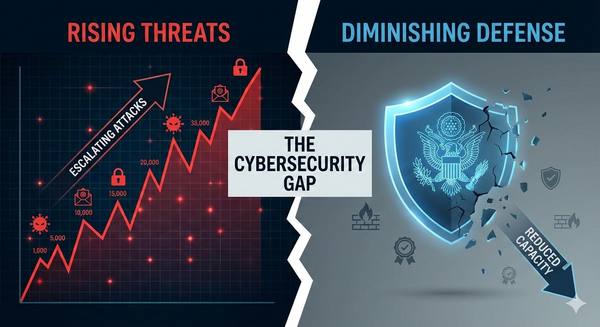
These figures confirm that cyber risk has evolved into an enterprise-wide, economic, and geopolitical challenge.
Strategic Recommendations for 2026 Planning
As security leaders finalize their 2026 strategies, this week's events highlight several priorities:
Vulnerability Management Excellence
The MongoBleed timeline—from patch to exploitation in seven days—demonstrates that threat actors are weaponizing vulnerabilities faster than ever. Organizations need:
- Continuous vulnerability scanning with prioritization based on exposure and exploitability
- Pre-established patch deployment workflows for critical assets
- Compensating controls ready for when immediate patching isn't feasible
Supply Chain Security Maturity
From the Trust Wallet compromise to MCP server risks, supply chain attacks continue to proliferate. Strengthen your posture with:
- Third-party security assessments with ongoing monitoring
- Software Bill of Materials (SBOM) requirements for vendors
- Runtime security monitoring for deployed third-party components
AI Governance Integration
With 85% of developers now regularly using AI tools, shadow AI adoption is the new shadow IT. Establish:
- Policies defining approved AI tools and MCP servers
- Security reviews for AI components before production deployment
- Monitoring for unauthorized AI agent activity
Identity-Centric Security
Credential theft remains a primary attack vector. Invest in:
- Phishing-resistant authentication (FIDO2, passkeys)
- Continuous authentication and behavioral analytics
- Privileged access management with just-in-time provisioning
Common Mistakes to Avoid
As teams respond to these end-of-year threats, avoid these pitfalls:
- Assuming internal databases are safe: MongoBleed exploitation doesn't require direct internet exposure if attackers have any network foothold
- Treating AI tools as standard applications: MCP servers and AI agents require specialized security controls
- Delaying patches for holiday change freezes: Critical vulnerabilities being actively exploited warrant emergency exceptions
- Ignoring credential rotation after potential exposure: Memory-leak vulnerabilities like MongoBleed may have exposed secrets before you patched
- Focusing solely on perimeter defenses: Supply chain attacks bypass traditional controls entirely
Conclusion: Vigilance Into the New Year
The final days of 2025 have delivered a clear message: the threat landscape shows no signs of slowing. MongoBleed's rapid weaponization, combined with breaches affecting millions of individuals and emerging AI security risks, demands that security leaders remain vigilant.
For organizations struggling to maintain pace with these evolving threats, external expertise can provide the acceleration needed. Whether conducting emergency vulnerability assessments, implementing AI security controls, or building mature security programs, partnering with experienced security consultants can make the difference between proactive defense and reactive recovery.