The New AI Security Imperative: What the WEF Cybersecurity Outlook and ETSI's AI Standard Mean for Your Organization
The cybersecurity landscape just received two simultaneous wake-up calls. On January 19, 2026, the World Economic Forum released its Global Cybersecurity Outlook 2026, revealing that 72% of IT leaders now fear nation-state cyber capabilities could escalate into full-scale cyberwar. The same week, the European Telecommunications Standards Institute (ETSI) published EN 304 223—the world's first globally applicable standard for AI cybersecurity.
These aren't just policy documents; they highlight critical shifts that security leaders must understand to feel empowered and responsible for guiding their organizations through evolving threats in an era of accelerating AI adoption, intensifying geopolitical fragmentation, and a dissolving line between nation-state actors and criminal enterprises.
For CISOs, IT Directors, and business executives, the message is unambiguous: the security frameworks that protected your organization in 2025 are inadequate for the threat environment you now face.
The Geopolitical Reality: Cyber as a Weapon of State Power
The WEF report confirms what security practitioners have suspected: cybersecurity is now inseparable from geopolitics. According to the survey of 804 global business leaders across 92 countries, 64% of organizations are now factoring geopolitically motivated cyberattacks into their risk mitigation strategies. Among the largest enterprises, 91% have fundamentally changed their cybersecurity strategies due to geopolitical volatility.
This isn't a theoretical concern; it underscores the real risk of infrastructure disruptions, underscoring the importance of reassessing an organization's risk exposure as nation-states demonstrate increasing cyber capabilities and a willingness to use them.
The WEF findings reveal a troubling confidence gap. While 84% of respondents in the Middle East and North Africa express high confidence in their country's ability to protect critical infrastructure, that figure drops to just 13% in Latin America and the Caribbean. Overall, 31% of survey respondents report low confidence in their nation's ability to respond to significant cyber incidents—up from 26% the previous year.
For enterprise security leaders, this means proactively aligning your cybersecurity strategies with emerging standards, such as ETSI EN 304 223, and with geopolitical threat intelligence. Developing adaptive risk management frameworks and conducting scenario planning can help your organization anticipate and mitigate evolving threats, ensuring resilience in a complex geopolitical landscape.
AI: The Double-Edged Transformation
The convergence of AI adoption and cybersecurity represents both the greatest opportunity and the greatest vulnerability enterprises face today. The WEF report found that 77% of organizations have adopted AI for cybersecurity, primarily for phishing detection (52%), intrusion and anomaly response (46%), and user-behavior analytics (40%).
However, AI-related vulnerabilities rose faster than any other category in 2025. Among the leading concerns are data leaks linked to generative AI (34%) and the advancement of adversarial capabilities (29%). A striking 94% of leaders expect AI to be the most consequential force shaping cybersecurity in 2026.
This dual reality—AI as defender and AI as attack vector—is precisely why ETSI's new standard matters.
ETSI EN 304 223: A Framework for AI Security
The publication of ETSI EN 304 223 signifies a regulatory shift that organizations must navigate. To do so effectively, security leaders should develop practical implementation plans, such as establishing cross-functional teams to interpret the 13 principles and integrate them into existing security processes, ensuring compliance and reducing operational risks.
The standard recognizes that AI presents unique cybersecurity challenges—data poisoning, model obfuscation, and indirect prompt injection-that require security leaders to feel equipped and proactive in implementing purpose-built defenses beyond traditional approaches.
ETSI EN 304 223 establishes 13 principles and requirements across five lifecycle phases:
Secure Design requires threat modeling that addresses AI-native attacks, including membership inference and model extraction. Organizations must restrict the functionality of AI systems to reduce the attack surface. If your system uses a multi-modal model but only requires text processing, the unused modalities represent unmanaged risk.
Secure Development mandates a comprehensive asset inventory that includes model weights, training data provenance, and component dependencies. Developers must provide cryptographic hashes for model components and document the training data sources with acquisition timestamps, creating the audit trail necessary for post-incident investigations.
Secure Deployment addresses operational controls, including API rate limiting to prevent adversarial exploitation and monitoring for anomalous inference patterns that may indicate active attacks.
Secure Maintenance requires ongoing vulnerability assessment and patch management specific to AI components, including model updates and training data refresh cycles.
Secure End of Life ensures proper decommissioning of AI systems, including secure deletion of model artifacts and training data to prevent unauthorized access or reuse.
Supply Chain: The Expanded Attack Surface
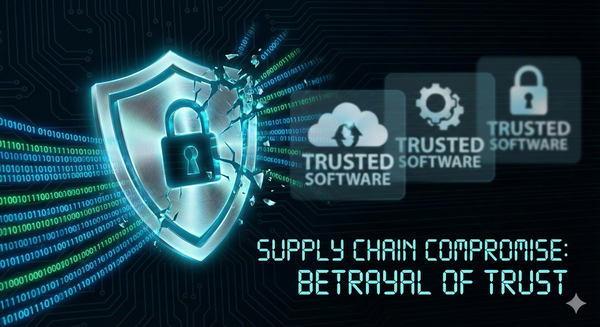
The WEF report reveals that CEOs of highly resilient organizations distinguish themselves through supply chain security practices. Specifically, 70% integrate security into procurement processes, and 59% prioritize supplier maturity assessments.
ETSI EN 304 223 reinforces this imperative. The standard requires that if an organization chooses to use AI models or components that are not well-documented, it must justify that decision and document the associated security risks. Procurement teams can no longer accept "black box" AI solutions without understanding—and accepting accountability for—the security implications.
For organizations relying on third-party AI vendors or open-source model repositories, this creates immediate compliance considerations. Training data provenance, model architecture transparency, and component authentication become procurement requirements rather than optional nice-to-haves.
The Fraud Epidemic: Why CEOs Are Shifting Priorities
Perhaps the most striking finding in the WEF report: 73% of respondents reported that they or someone in their network had been personally affected by cyber-enabled fraud in 2025. This epidemic has fundamentally shifted executive priorities.
CEOs now rank cyber-enabled fraud ahead of ransomware as their top concern. This diverges from CISO priorities—security leaders remain focused on ransomware and supply chain resilience. The gap represents both a communication challenge and an opportunity for security teams to demonstrate business alignment.
The AI dimension of this threat cannot be understated. Generative AI has democratized sophisticated social engineering, enabling threat actors to create convincing business email compromise campaigns, voice-cloning attacks, and deepfake video impersonations at scale. Traditional awareness training, while still necessary, is insufficient against AI-generated attacks that can pass human scrutiny.
Actionable Recommendations for Security Leaders
Based on the convergence of these reports, security leaders should prioritize the following initiatives:
Conduct an AI Security Assessment. Inventory all AI systems in your environment—not just those your organization deploys, but those embedded in third-party applications and services. Map each against the ETSI EN 304 223 lifecycle phases and identify gaps. This assessment should include shadow AI deployments that business units may have implemented without IT oversight.
Integrate Geopolitical Intelligence into Threat Modeling. If your organization operates in or depends on supply chains that cross geopolitical boundaries, update your threat models to account for nation-state risk exposure. This includes assessing technology vendor dependencies against jurisdictional and sovereignty concerns.
Update Procurement Requirements. ETSI EN 304 223 provides a concrete framework for evaluating the security maturity of AI vendors. Incorporate these requirements into procurement processes now, before they become regulatory mandates. Require training data provenance documentation, model transparency specifications, and security testing evidence from AI vendors.
Close the CEO-CISO Priority Gap. Develop board-level reporting that addresses fraud risk with the same rigor applied to ransomware and infrastructure threats. Quantify fraud exposure in business terms and present AI-enabled social engineering as a business risk, not merely a technical challenge.
Reassess National Preparedness Assumptions. If your business continuity planning assumes national cyber defense capabilities will mitigate specific threat scenarios, validate those assumptions against current WEF data. For organizations in regions with low confidence scores, develop autonomous resilience capabilities.
Monitor for AI-Specific Attack Patterns. Traditional security monitoring may not detect AI-native attacks such as data poisoning or prompt injection. Implement monitoring capabilities specific to your AI deployments, including anomaly detection on model behavior and inference patterns.
Common Mistakes to Avoid
Treating AI Security as a Future Problem. The WEF data shows AI-related vulnerabilities are rising faster than any other category. Organizations that defer AI security initiatives are accumulating technical debt that will become increasingly expensive to remediate.
Assuming Compliance Equals Security. ETSI EN 304 223 establishes a baseline, not a comprehensive defense. Organizations should treat the standard as a foundation and layer additional controls based on their specific threat model and risk tolerance.
Isolating AI Security from Enterprise Security Architecture. AI security cannot function as a separate domain. Integration with existing identity management, network segmentation, and incident response capabilities is essential for effective defense.
Underestimating the Supply Chain Dimension. The largest organizations have changed their cybersecurity strategies in response to geopolitical volatility. If your suppliers haven't made similar adaptations, you inherit their vulnerabilities.
The Path Forward
The World Economic Forum report concludes with a critical insight: organizations that thrive will be those that recognize cyber resilience as a shared, strategic, and systemic responsibility. The release of ETSI EN 304 223 provides a concrete framework for operationalizing that recognition in the AI domain.
The organizations that act now—conducting AI security assessments, integrating new standards into procurement, and aligning security priorities with executive concerns—will establish a competitive advantage. Those who wait for regulatory mandates or significant incidents will find themselves perpetually reactive in a threat environment that increasingly favors the attacker.
The 2026 threat landscape demands more than incremental improvement. It requires fundamental reassessment of how we secure the AI systems that are rapidly becoming central to business operations—and how we defend against adversaries who have already weaponized those same technologies.
Sources
- World Economic Forum. "Global Cybersecurity Outlook 2026." January 2026. https://www.weforum.org/publications/global-cybersecurity-outlook-2026/
- World Economic Forum Press Release. "Cyber-Enabled Fraud Is Now One of the Most Pervasive Global Threats, Says New Report." January 12, 2026. https://www.weforum.org/press/2026/01/cyber-enabled-fraud-is-now-one-of-the-most-pervasive-global-threats-says-new-report-45dc3f679b/
- European Telecommunications Standards Institute (ETSI). "ETSI EN 304 223 V2.1.1 - Securing Artificial Intelligence (SAI); Baseline Cybersecurity Requirements for AI Models and Systems." December 2025. https://www.etsi.org/deliver/etsi_en/304200_304299/304223/02.01.01_60/en_304223v020101p.pdf
- ETSI Press Release. "ETSI releases world-leading standard for securing AI." January 2026. https://www.etsi.org/newsroom/press-releases/2627-etsi-releases-world-leading-standard-for-securing-ai
- Help Net Security. "Global tensions are pushing cyber activity toward dangerous territory." January 19, 2026. https://www.helpnetsecurity.com/2026/01/19/cybersecurity-geopolitical-tensions/
- Help Net Security. "A new European standard outlines security requirements for AI." January 19, 2026. https://www.helpnetsecurity.com/2026/01/19/etsi-european-standard-ai-security/
- Industrial Cyber. "WEF Global Cybersecurity Outlook 2026 flags AI acceleration, geopolitical fractures; calls for shared responsibility." January 2026. https://industrialcyber.co/reports/wef-global-cybersecurity-outlook-2026-flags-ai-acceleration-geopolitical-fractures-calls-for-shared-responsibility/