The New Phishing Playbook: How Social Engineering Attacks Are Bypassing MFA in 2026
This week brought a stark reminder that even organizations with robust multi-factor authentication can fall victim to social engineering. Three separate campaigns—targeting LastPass users, enterprise identity platforms, and energy sector organizations—demonstrate how attackers are evolving beyond traditional phishing to bypass the security controls we have come to rely upon.
For security leaders, these developments signal a fundamental shift: MFA is no longer the silver bullet it once was. Attackers have adapted, and our defenses must evolve accordingly.
LastPass Users Targeted in Sophisticated Master Password Campaign
On January 21, 2026, LastPass issued an urgent alert about an active phishing campaign targeting users' master passwords—the single key that unlocks access to potentially hundreds of stored credentials.
The campaign, which began around January 19, uses emails claiming that LastPass will conduct maintenance and urging recipients to back up their password vaults within 24 hours. The timing was strategic: the campaign launched over a U.S. holiday weekend when security teams are often understaffed and slower to respond.
The attack flow reveals careful planning. Victims who click the "Create Backup Now" button are redirected via an AWS-hosted intermediary before landing on a convincing credential-harvesting page. The multi-hop redirect chain is designed to evade email security tools and URL filtering.
What makes this campaign particularly dangerous is the target. Unlike typical phishing that compromises a single account, successfully stealing a LastPass master password gives attackers access to the victim's entire digital life—corporate systems, financial accounts, personal services, and everything in between. With 33 million users and over 100,000 business customers, the potential impact is substantial.
The campaign uses multiple sender addresses and subject lines to bypass email filters. Known subject lines include "LastPass Infrastructure Update: Secure Your Vault Now," "Your Data, Your Protection: Create a Backup Before Maintenance," and "Protect Your Passwords: Backup Your Vault (24-Hour Window)."
LastPass emphasized that no legitimate communication from the company will ever request a master password or impose urgent deadlines. The company is working with partners to take down the malicious infrastructure.
Okta Warns of Next-Generation Vishing Kits Targeting Enterprise SSO
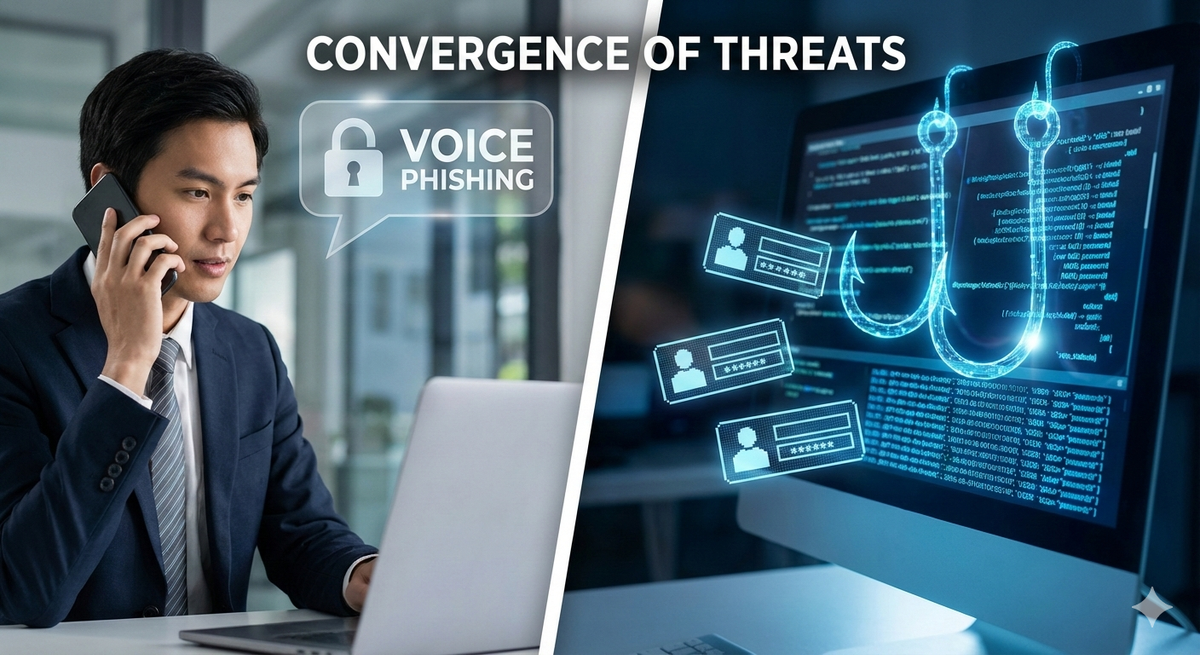
On January 23, 2026, Okta's threat researchers disclosed a concerning evolution in voice phishing: custom-built phishing kits that enable attackers to intercept credentials and control authentication flows in real time during phone calls.
These are not crude scripts or pre-recorded messages. The kits enable callers to dynamically display different pages in a victim's browser, synchronizing with whatever the caller is saying and adapting to any MFA challenges that appear during the authentication process.
The kits are being offered as a service on dark web forums, targeting Google, Microsoft, Okta, and cryptocurrency providers. This commoditization means organizations now face not just sophisticated threat actors, but also lower-skilled attackers who can purchase access to professional-grade tools.
The technical capability is alarming. These vishing-focused phishing kits can intercept MFA push notifications, including those using number-matching challenges. When a victim receives a prompt asking them to enter or select a specific number, the social engineer on the phone simply asks them to provide that number—and the victim, believing they are speaking with legitimate IT support, complies.
This represents an evolution of the adversary-in-the-middle (AitM) technique that has plagued traditional email phishing. By adding a human element—the voice call—attackers can overcome the friction that typically causes phishing attempts to fail.
The rise of vishing-as-a-service follows a 442% increase in vishing operations between the first and second halves of 2024, according to CrowdStrike's 2025 Global Threat Report. The trend has only accelerated since.
The energy sector's experience underscores the importance of prompt patching and rapid response, helping security teams feel capable of controlling and mitigating complex threats. Microsoft's Defender Research Team disclosed on January 22, 2026, that multiple energy sector organizations were victims of a sophisticated adversary-in-the-middle phishing campaign that abused SharePoint's legitimate file-sharing functionality.
The attack began with phishing emails from previously compromised trusted vendors—a technique that immediately bypasses many security controls because the sending organization is recognized and trusted. Subject lines like "NEW PROPOSAL – NDA" and SharePoint URLs requiring authentication appeared entirely legitimate to recipients.
The multi-stage attack proceeded through a carefully orchestrated sequence. First, victims clicked what appeared to be a legitimate SharePoint link and entered their credentials on a fake login page. Second, attackers used those credentials in real time to authenticate to the legitimate service, thereby intercepting the session cookie. Third, with the stolen session cookie, attackers signed in from different IP addresses and created inbox rules to delete incoming emails and mark all messages as read—hiding their activity. Fourth, attackers sent hundreds of phishing emails to the compromised user's contacts, both inside and outside the organization. Fifth, when recipients questioned the legitimacy of the emails, attackers responded to convince them the messages were genuine, then deleted those conversations.
Microsoft emphasized that standard incident response is insufficient for these attacks. Password resets alone do not remediate the compromise, because attackers have already stolen valid session cookies. Organizations must revoke active session cookies and remove attacker-created inbox rules to fully recover.
The campaign demonstrates how attackers chain multiple techniques to maximize impact: trusted sender reputation, legitimate platform abuse, session hijacking, and automated follow-on attacks that expand the compromise exponentially.
Why Traditional MFA Is No Longer Sufficient
These three campaigns reveal a familiar pattern: attackers are designing social engineering attacks that bypass multi-factor authentication rather than trying to defeat it directly, underscoring the need for heightened awareness.
The LastPass campaign targets the master password directly, bypassing MFA by attacking the authentication that happens before platform-level MFA even triggers. The vishing kits intercept MFA challenges in real-time, using social engineering to extract one-time codes or push notification approvals directly from victims. The energy sector campaign steals session cookies, which represent authenticated sessions that have already passed MFA verification.
This evolution reflects a broader truth: as MFA adoption has increased, attackers have moved up the attack chain. Rather than guessing passwords or brute-forcing authentication, they now focus on the human elements that MFA cannot protect.
Immediate Actions for Security Teams
Organizations should implement layered defenses that empower security teams and foster confidence, assuming any single control can be bypassed and emphasizing the importance of comprehensive security strategies.
Regarding user awareness and training, employees should feel supported and confident in recognizing vishing attacks, understanding that legitimate IT support will never ask them to read MFA codes aloud, approve push notifications for sessions they did not initiate, or provide credentials over the phone without verification through a known callback number.
For session management hardening, organizations should implement conditional access policies that limit session validity, require re-authentication for sensitive actions, and detect anomalous login patterns such as impossible travel or new device enrollment. Session tokens should have limited lifespans, particularly for privileged access.
For phishing-resistant authentication, organizations should consider deploying FIDO2 security keys or passkeys for high-value accounts. These authentication methods are resistant to AITM attacks because they cryptographically bind authentication to the legitimate service origin—a phishing site cannot complete the handshake.
Regarding inbox rule monitoring, security teams should implement detection for suspicious inbox rules, particularly those that delete incoming mail or forward messages externally. These rules are standard persistence mechanisms in BEC campaigns and should trigger immediate investigation.
Finally, for identity provider hardening, organizations should configure network zones or tenant access control lists that deny access from anonymizing services commonly used by threat actors. Implement monitoring for authentication attempts from unusual locations or IP ranges.
CISA Adds Four New Actively Exploited Vulnerabilities
Adding to the week's concerns, CISA added four new vulnerabilities to its Known Exploited Vulnerabilities (KEV) catalog on January 22, 2026. These include a Vite Vitejs improper access control vulnerability (CVE-2025-31125), a Versa Concerto improper authentication vulnerability (CVE-2025-34026), a Prettier eslint-config-prettier embedded malicious code vulnerability (CVE-2025-54313), and a Synacor Zimbra Collaboration Suite PHP remote file inclusion vulnerability (CVE-2025-68645).
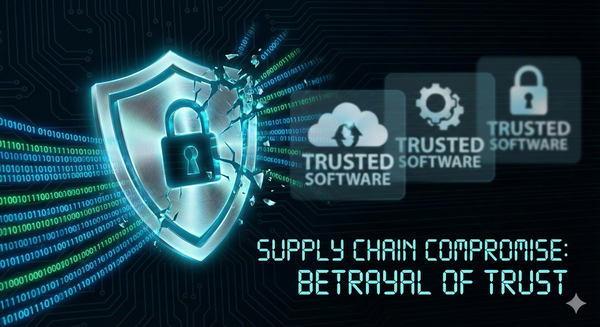
The Prettier vulnerability is particularly notable as an example of supply chain risk—malicious code embedded in a widely-used development tool could affect millions of applications if developers fail to update promptly.
Federal agencies must remediate these vulnerabilities by February 12, 2026. Private-sector organizations should prioritize patching in light of confirmed active exploitation.
The Strategic Imperative
The convergence of these campaigns reveals a threat landscape where technical controls alone are insufficient. Attackers have invested heavily in understanding human psychology and business processes, and they are designing attacks specifically to exploit the gaps between security tools.
For security leaders, the path forward requires acknowledging that identity is now the primary battleground. Perimeter defenses matter less when attackers can convince employees to hand over authenticated access.
This means investment in detection capabilities that monitor for post-authentication anomalies, incident response playbooks that account for session hijacking and BEC, and continuous user education that evolves as attack techniques change.
The organizations that will weather this threat landscape are those that treat identity security as a program, not a project—with ongoing investment, continuous improvement, and realistic assumptions about what their controls can and cannot prevent.
Sources
- LastPass Official Blog - "January 2026 Phishing Campaign Targeting LastPass Customers [UPDATE]" (January 21, 2026)
- https://blog.lastpass.com/posts/january-2026-phishing-campaign-targeting-lastpass-customers-update
- Infosecurity Magazine - "LastPass Warns of Phishing Campaign Attempting to Steal Master Passwords" (January 22, 2026)
- https://www.infosecurity-magazine.com/news/lastpass-phishing-master-passwords/
- The Register - "Don't click the LastPass 'create backup' link" (January 21, 2026)
- https://www.theregister.com/2026/01/21/lastpass_backup_phishing_campaign/
- TechRepublic - "LastPass Warns of Phishing Campaign Targeting Its Customers" (January 22, 2026)
- https://www.techrepublic.com/article/news-lastpass-phishing-campaign/
- Help Net Security - "Okta users under attack: Modern phishing kits are turbocharging vishing attacks" (January 23, 2026)
- https://www.helpnetsecurity.com/2026/01/23/okta-vishing-adaptable-phishing-kits/
- Microsoft Security Blog - "Resurgence of a multi‑stage AiTM phishing and BEC campaign abusing SharePoint" (January 21, 2026)
- https://www.microsoft.com/en-us/security/blog/2026/01/21/multistage-aitm-phishing-bec-campaign-abusing-sharepoint/
- The Register - "Phishing attacks abuse SharePoint, target energy orgs" (January 22, 2026)
- https://www.theregister.com/2026/01/22/crims_compromised_energy_firms_microsoft
- Help Net Security - "Energy sector orgs targeted with AiTM phishing campaign" (January 22, 2026)
- https://www.helpnetsecurity.com/2026/01/22/energy-sector-aitm-phishing-sharepoint-misuse/
- CISA - "CISA Adds Four Known Exploited Vulnerabilities to Catalog" (January 22, 2026)
- https://www.cisa.gov/news-events/alerts/2026/01/22/cisa-adds-four-known-exploited-vulnerabilities-catalog
- BleepingComputer - "CISA confirms active exploitation of four enterprise software bugs" (January 23, 2026)
- https://www.bleepingcomputer.com/news/security/cisa-confirms-active-exploitation-of-four-enterprise-software-bugs/
- Bitdefender - "LastPass 'create backup' email is a phishing scam targeting your master password" (January 22, 2026)
- https://www.bitdefender.com/en-us/blog/hotforsecurity/lastpass-create-backup-email-is-a-phishing-scam-targeting-your-master-password