The SaaS Supply Chain Attack: What the McGraw-Hill Breach Means for Executives in 2026

When your vendor’s front door becomes your own
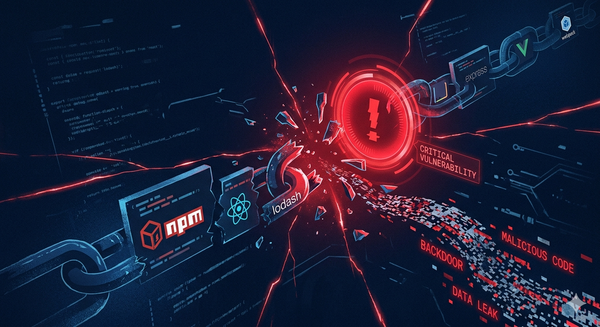
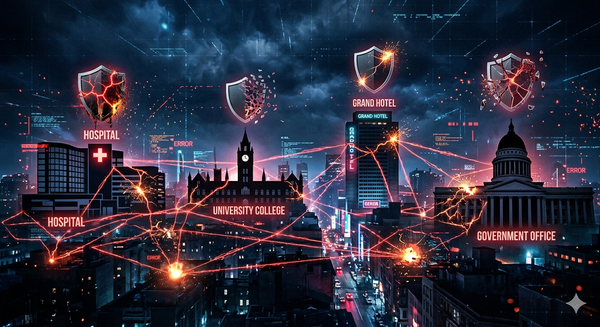
In April, McGraw-Hill confirmed that an unauthorized actor had accessed its Salesforce environment and extorted the company, exposing data linked to roughly 13.5 million accounts. In the same news cycle, Booking.com confirmed unauthorized third-party access to reservation data, Basic-Fit disclosed compromise of the personal and banking data of more than a million European members, and the cloud platform Vercel traced a security incident back to the compromise of a third-party developer tool, Context.ai.These companies weren't breached as most boards imagine. Their defenses held, but attackers exploited trusted vendors and integrations.In 2026, your security is only as strong as your weakest vendor. Every tool, CRM, identity provider, AI assistant, marketing platform, e-commerce plugin adds another link to a growing chain.This brief bridges the gap between the recent breaches and what executive leaders must now prioritize. It explains what changed in April 2026, why it matters, and what steps executives should take to avoid being the next breach headline.
What the April 2026 breaches have in common
If you look beyond the company names, a clear pattern appears. In almost every case, attackers didn’t breach firewalls, trick employees, or exploit outdated servers. Instead, they got in by compromising a SaaS app or an OAuth-connected tool, using real credentials and API tokens.
The CRM environment as a pivot point
In early 2026, attackers often targeted cloud CRM systems and the apps connected to them. With valid OAuth tokens or admin credentials, they can access customer records, support tickets, and sales messages without triggering any alerts. The McGraw-Hill case is just the latest example.
The AI tool pivot
Vercel’s incident, caused by a compromised third-party tool, is the kind of event executives will see more often in 2026. AI-powered developer tools, agents, and copilots now have deep access to source code, build systems, and production data. These tools are becoming top targets in the supply chain, but most companies haven’t tracked them.
The plugin and integration layer
That same week, EssentialPlugin, a WordPress plugin developer, reportedly sent out malicious updates to over 30 plugins used on thousands of sites. This is a classic supply chain attack at the integration level. Most companies have hundreds of OAuth-connected apps in their main SaaS systems, but few know exactly which ones they are.
In response, here’s a 5-step framework for executives to act on this quarter:
1) Identify key challenges, 2) Set priorities, 3) Align teams, 4) Track progress, 5) Adjust strategies.This is a pragmatic framework, not a vendor pitch. The principles align with the NIST Cybersecurity Framework 2.0 and standard third-party risk management (TPRM) practice.
- Create a detailed inventory of all SaaS apps. List each app connected to your identity provider and your primary platforms (such as CRM, productivity suite, code repository). Expect to uncover more apps than anticipated.
- Rank vendors by potential breach impact, not spend. A small tool with customer data can pose more risk than a costly platform with no sensitive information. Focus on each vendor's data and access.
- Request robust evidence of your vendors' security controls. Go beyond a SOC 2 report: ask how vendors detect compromised tokens, how quickly they report incidents, and whether they enforce strong, phishing-resistant MFA for admin users.
- Implement a SaaS Security Posture Management (SSPM) solution. Use SSPM tools to find misconfigurations, overly broad integrations, and unused admin accounts in your SaaS systems. The key is capability, not which vendor you choose.
- Run a tabletop exercise for a third-party SaaS breach. Simulate a scenario in which your CRM provider is the source of the breach. Assign who informs legal, notifies regulators (per HIPAA, GDPR, SEC, or state laws). Assess if these decisions can be made within 24 hours to ensure readiness.
Common mistakes to avoid
Executives often overlook three key risks.
- Shadow SaaS: These are tools a team signs up for with a company card, never reviewed by IT or security, but still holding real customer data.
- Relying on contracts instead of real control: Indemnification clauses can’t protect your reputation. In every April 2026 case, the company’s brand still suffered.
- Using an annual questionnaire as your only check: Vendor security can change every week, so a yearly review is more like security theater than real assurance.
The bottom line for the boardroom
The April 2026 incidents show that today’s companies rely on many SaaS and AI providers. That network is now the primary target of attacks. Businesses that succeed will treat SaaS supply chain risk as seriously as endpoint and network security.
Primary sources
- Data Breach Roundup (Apr 17 to 23, 2026), Privacy Guides
- News Roundup, 24th April 2026, Digital Forensics Magazine
- April 2026 Data Breaches: 15+ Major Incidents (SharkStriker)
- A Week in Security (April 20 to April 26), Security Boulevard
- Cybersecurity Week in Review: April 14 to 20, 2026 (Senthorus)
- 20th April Threat Intelligence Report (Check Point Research)