The Week the Supply Chain Cracked: What April 2026’s Axios npm Attack Reveals About the New Threat Reality
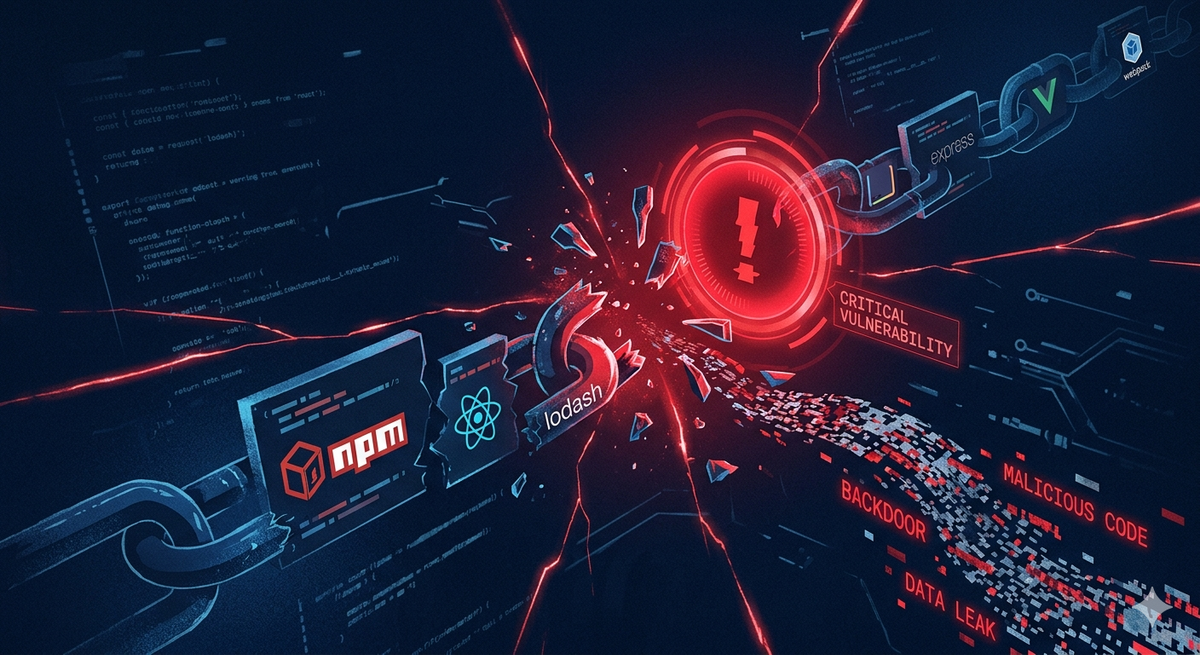
On March 31, 2026, attackers moved with alarming speed, uploading malicious versions of a trusted JavaScript package under the radar. By 03:20 UTC—less than three hours later—the breach was complete, and the packages were removed. Thousands of organizations urgently faced a critical question: Did we pull the compromised build? Getting that answer immediately was vital because every minute counted.This rapid attack illustrates the urgency of recent warnings from M-Trends 2026. As organizations confront this new reality, the pace and sophistication of attackers demand a shift in defense strategies.
What Happened: The Axios npm Supply Chain Attack
Axios is the HTTP client library that powers a significant portion of the modern web. With an estimated 100 million downloads per week and a presence in approximately 80% of cloud and code environments, it is precisely the kind of critical, trusted dependency that nation-state threat actors covet.From 00:21 to 03:20 UTC on March 31, a compromised maintainer account published Axios versions 1.14.1 and 0.30.4, adding a malicious dependency: plain-crypto-js. This dependency acted as a dropper for WAVESHAPER.V2, a backdoor that retrieved additional malware for Windows, macOS, and Linux.Google’s Threat Intelligence Group (GTIG) attributed the attack to UNC1069, a North Korea-nexus group active since 2018 known for targeting cryptocurrency and finance platforms. The loader, SILKBELL, used the victim's OS fingerprint to deliver the correct payload, complicating detection.
Why This Attack Matters Beyond the Headline
This was not a new zero-day exploit. Instead, it was a careful and precise use of a known tactic against a valuable target, and it worked fast. Three key points make this incident especially important:
- Trust itself became the attack surface. Attackers did not use a code vulnerability; instead, they took advantage of the trust organizations have in published package versions.
- In many organizations, automated CI/CD systems probably downloaded and used the malicious dependency without anyone checking it first.
- Three hours was enough time. Most enterprise build cycles finish in that period, so the malicious code could be delivered before anyone notices.
The Broader Context: M-Trends 2026 Confirms a Machine-Speed Threat Landscape
The Axios attack is not an isolated event. It is urgent and undeniable evidence of what Mandiant’s M-Trends 2026, drawing from over 500,000 hours of incident response, revealed just days before:
- 22 seconds: The new median time for attackers to hand off initial access within a compromised network is down from over eight hours in 2022. Attackers now move like automated systems.
- 7 days: The mean time to exploit a newly disclosed vulnerability. Exploitation is routinely happening before a patch is even published.
- 32% of intrusions began via exploits (the leading vector for the sixth consecutive year); 11% involved voice phishing, a rising vector.
- Organizations that detected breaches internally did so in a median of 9 days. Those relying on external notification took 25 days, a troubling widening of an already dangerous gap.
The Axios incident is a vivid example of a rapid, large-scale attack on a critical dependency that can cascade massive downstream risk. Organizations must act in real time to defend against this new threat speed.
A Concurrent Threat Worth Watching
On March 26 and 27, another group (UAC-0255) ran phishing campaigns pretending to be Ukraine’s CERT-UA. They used this to spread a remote administration tool called AGEWHEEZE, targeting government agencies, healthcare, financial institutions, and software companies. This was a different group from UNC1069, but the timing shows how coordinated state-backed attacks have become.
Agentic AI: An Emerging Attack Surface CISOs Cannot Ignore
Another important development that week was the rapid growth of agentic AI and the challenge of keeping enterprise security ready for it.
- 83% of organizations plan to deploy agentic AI into business functions
- Only 29% report being ready to operate those systems securely.
- 88% have experienced suspected or confirmed AI agent security incidents
- 79% operate with significant blind spots, unable to fully observe what their AI agents are doing, what data they’re touching, or what actions they’re triggering
Mandiant’s M-Trends 2026 identified new malware, PROMPTFLUX and PROMPTSTEAL, which use large language models to evade detection. Adversarial AI threats are now active.Microsoft and Okta both released guidance this week on securing agentic AI deployments, with Okta announcing its “Okta for AI Agents” framework to help organizations manage the explosive growth of non-human identities.Best practice: Treat every AI agent as an identity. Give them limited permissions, set behavior baselines, enable audit logging, and apply the same Zero Trust checks you use for privileged human accounts.
What to Do Right Now
This Week
- Audit all dependency manifests and lock files for Axios versions 1.14.1 or 0.30.4. Extend this audit to transitive dependencies, not just top-level requires.
- Review CI/CD build histories from March 31, 2026, between 00:00–04:00 UTC for automated package pulls from npm that included these versions.
- Rotate all credentials and tokens for any environment that may have executed a build that incorporated the malicious packages.
- Check for indicators of compromise associated with WAVESHAPER.V2 and SILKBELL. Consult IOCs published by Huntress, SOCRadar, and Google GTIG.
- Audit package registry accounts for all developers with publish permissions. Enforce MFA immediately if not already in place.
Common Mistakes to Avoid
“It was only live for three hours.” However, many CI/CD pipelines run on every commit or on a schedule. Three hours is a long time when code is distributed across many systems.Only checking direct dependencies is not enough. WAVESHAPER.V2 came in as a transitive dependency, with plain-crypto-js added to Axios. Your SBOM approach needs to cover the entire dependency tree.Do not treat developer accounts as low-risk. Maintainer accounts for popular open-source packages are valuable targets. Use the same access controls and require MFA, just as you would for a domain admin account.Do not assume your AI agents are safe from attack. Since 88% of organizations have already reported suspected AI agent incidents, thinking you are safe is itself a risk.
The Bottom Line
The Axios npm attack is a stark warning for every organization. Trust in maintainer accounts, open-source projects, and automated build pipelines can instantly become a path for nation-state malware to infiltrate critical systems. All it took was a stolen credential and three hours. There was no zero-day, no inside sabotage, just the exploitation of trust and time.M-Trends 2026 is explicit: attacks now happen at machine speed, and this is the new normal. Attackers move in as quickly as 22 seconds, often before patches are publicly released.
Your organization must move beyond prevention. Double down now on resilience, visibility, auditability, and always assume compromise.Do not wait for a breach before acting. Update your software supply chain security plan today. Keep your SBOM current, and establish a process now for managing AI agent identities and permissions. These steps must not be delayed; complete them this quarter.